
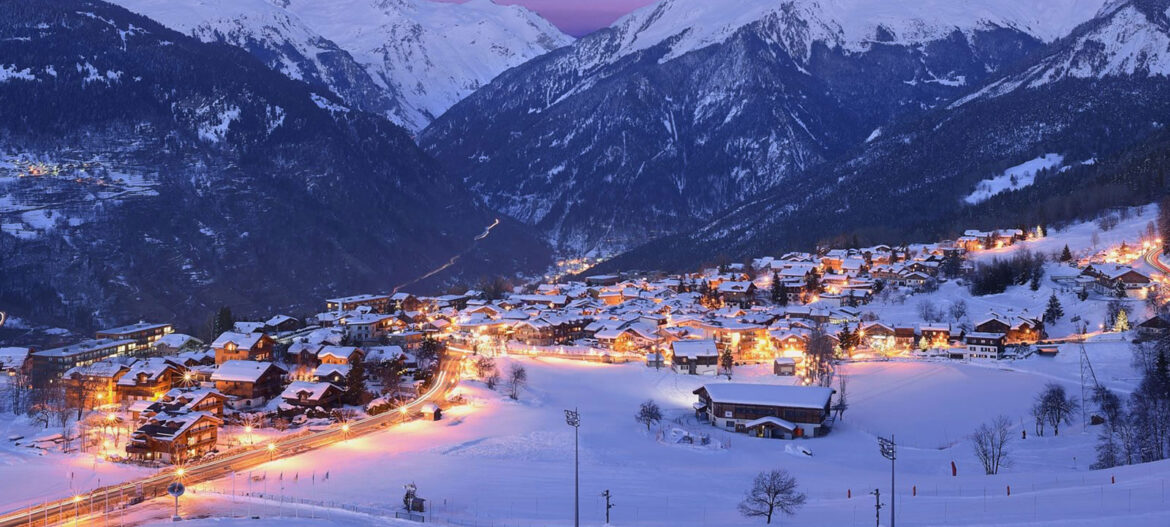
Where Winter Becomes a Social Performance
Courchevel is not simply a ski resort in the French Alps. It is an idea about winter — how it should look, how it should feel, and how it should be lived when comfort, beauty, and visibility matter as much as snow conditions. Conceived in 1946 as a progressive post-war mountain destination, it was initially imagined as accessible and democratic. History had other plans. Over the decades, Courchevel rose steadily in altitude and in status, until it became one of the most recognized winter addresses in the world.
Spread across five villages — Saint-Bon 1100, Le Praz 1300, Moriond 1650, and the emblematic Courchevel 1850 — the resort changes character as you climb. The higher you go, the more discreet and elevated the atmosphere becomes. By the time you reach 1850, you are no longer in a traditional mountain village; you are in a rarefied enclave where Palace hotels, monumental private chalets, and ski-in ski-out architecture define daily life. Here, nearly everything connects directly to the slopes, eliminating friction and replacing it with flow. Convenience is not advertised. It is assumed.
High Altitude, High Gastronomy
Courchevel holds a remarkable distinction: it is the ski resort with the highest concentration of Michelin-starred restaurants in the world. That fact alone says something about its priorities.
Dining here is not an afterthought to sport — it is part of the performance. At Le 1947 by Yannick Alléno, haute cuisine is interpreted through precision and theatrical elegance. Le Chabichou continues to represent Savoyard tradition refined to its highest expression. Pierre Gagnaire’s presence reinforces the resort’s seriousness about gastronomy, while newer addresses reinterpret luxury through global influences and contemporary design.
Yet the true character of Courchevel’s culinary culture lies in its rhythm. Long lunches unfold on sunlit terraces with Champagne chilled beside the table. Music drifts across the snow. Plates are composed with discipline, but the atmosphere is relaxed, almost celebratory. As afternoon turns into evening, guests retreat to chalets where private chefs prepare multi-course dinners in intimate dining rooms warmed by stone fireplaces and polished wood. The excess is visible, but it is curated. Nothing feels accidental.
Fashion, Visibility, and Ritual
Courchevel has often been described as the winter equivalent of Saint-Tropez, and the comparison is not exaggerated. Boutiques from Chanel to Hermès, Prada to Miu Miu, line the central streets of 1850. The ephemeral Chanel atelier has become as anticipated as the first snowfall. Multi-brand institutions such as Montaigne and Bernard Orcel anchor the fashion identity of the resort, turning an afternoon walk into a ritual of selection and display.
Here, outerwear is not merely functional; it is a statement. Après-ski is not simply a drink; it is an appearance. The slopes may be the stage, but the village is the audience and the mirror.
The Social Geography of Height
Altitude in Courchevel carries meaning beyond meters above sea level. Private jets land at nearby airstrips. Helicopters occasionally skim the peaks before disappearing behind ridgelines. Yet despite the spectacle, there is a surprising sense of order. Days follow a pattern that many return to year after year: early runs on immaculate pistes, a panoramic lunch, an afternoon spa ritual, a Michelin-starred dinner, and late-night gatherings in refined lounges or behind chalet doors.
The energy is intense but controlled. Glamour is present but rarely chaotic. Even excess here feels measured, shaped by long familiarity with privilege and precision.
Beyond Winter
While winter remains its defining season, Courchevel does not dissolve when the snow melts. In summer, the surrounding Vanoise National Park reveals alpine lakes, wildflower meadows, and hiking trails that stretch across dramatic terrain. Mountain biking replaces skiing; terraces remain active; the sense of elevation continues to define the experience.
Courchevel is ultimately about living at height — socially, gastronomically, aesthetically. It does not apologize for pleasure, and it does not dilute intensity.
In this corner of the Alps, winter is not endured. It is elevated, stylized, and fully embraced.
Courchevel gives winter room to expand—
and a place to return together.
Courchevel suits guests traveling as families or multi-household groups who want ski-focused days balanced by generous private living. It appeals to those who value access, scale, and shared winter life without sacrificing autonomy or comfort.
Yes, especially for guests who value predictability, access, and a well-supported ecosystem throughout the season.
Inquiries
If you are planning a winter stay in Courchevel and want to understand whether a private chalet or villa aligns with your group and way of staying, Casa Duo is available to discuss availability and fit. Contact us to discuss availability