
Sardinia: A Coast Designed for the Elite
A masterplanned Mediterranean domain where architecture, ownership, and nautical culture reshaped an untouched shoreline into Europe’s most deliberate luxury territory
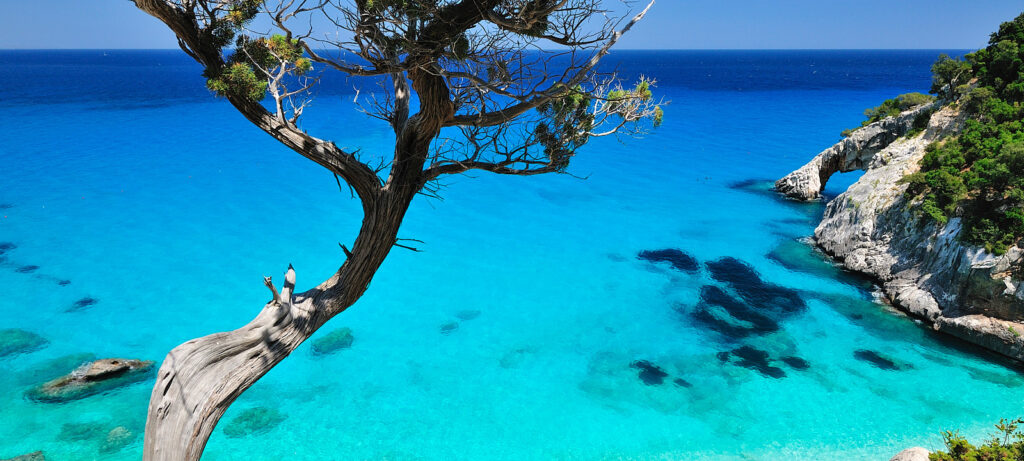
A Coast That Did Not Emerge — It Was Conceived
Sardinia is vast. Yet its most concentrated expression of prestige lies in the northeast, along the Costa Smeralda — a coastline that did not rise slowly into relevance but was identified, acquired, and defined.
Unlike Amalfi, layered through centuries of maritime republics, or Capri, shaped by imperial retreat and island boundary, this shore was conceived. In the early 1960s, Karim Aga Khan IV encountered the granite coves and luminous waters of Gallura. Admiration turned into acquisition. Thousands of hectares were consolidated. A consortium imposed coherence.
Porto Cervo was not discovered; it was positioned.
From the outset, hotels, villas, marina, and yacht club followed unified design and economic logic. The coastline did not accumulate luxury over time. It was calibrated.
A Controlled Aesthetic
The built language of Costa Smeralda avoided both Italian monumentality and anonymous modernism. It adopted curved façades, irregular fenestration, softened volumes, pastel tones, granite, timber, shadowed arcades. Buildings settled into landscape rather than asserting dominance over it.
Projects such as Cala di Volpe demonstrated the manifesto early: architecture sculpted into terrain, theatrical yet restrained.
Where other Mediterranean coasts of the same era expanded through signage, visible infrastructure, and speculative sprawl, Costa Smeralda enforced visual discipline. No billboards. No exposed service corridors. Roads bend discreetly. Villas remain embedded within vegetation. Even at scale, exposure is measured.
The result is not accumulation. It is authorship.
The Nautical Hierarchy
At its center stands Porto Cervo — not a medieval town but a constructed marina capital. Arrival by yacht is not secondary; it defines entry. The Yacht Club formalized hierarchy. Social life revolves around moorings, terraces, private decks, and invitation.
From the late 1960s onward, Costa Smeralda became Europe’s summer stage for industrialists, royalty, designers, and performers. Events at Cala di Volpe or Porto Cervo are not interruptions of identity; they are extensions of it.
Where Amalfi compresses and Capri filters, Sardinia hosts.
Space is not managed through vertical separation but through territorial breadth.
Land as the Primary Variable
The contemporary rental and sales markets confirm the domain logic.
Prime 5–6 bedroom villas in northeast Sardinia frequently command €23,000–€65,000 per week. Larger 7-bedroom compounds often range from €56,000 to €100,000+. Exceptional waterfront estates and architecturally iconic holdings surpass €150,000 per week during peak season.
These figures do not derive from density. They derive from land control.
Plots are expansive. Gardens are protected. Private pathways to the sea are common in upper tiers. Infinity pools overlook uninterrupted horizon rather than neighboring terraces. Compared with Amalfi’s €18,000–€45,000 compression band or Capri’s €20,000–€50,000 perimeter premium, Costa Smeralda operates on a higher ceiling driven by acreage and autonomy.
This is not vertical pricing. It is territorial valuation.
Ownership Behavior
The ownership profile reinforces this positioning.
Transactions often occur through private networks rather than open circulation. Hold periods extend. Multi-decade family stewardship is common. The coastline has expanded cautiously, protecting both visual coherence and capital concentration.
Unlike organically evolved enclaves where generational sediment defines prestige, Sardinia demonstrates that deliberate acquisition can achieve similar endurance — provided expansion remains controlled.
Prestige here is not inherited aristocracy. It is preserved authorship.
Behavioral Territory
The Sardinia guest behaves differently from the Amalfi or Capri visitor.
Movement is vehicular or nautical rather than pedestrian. Days unfold around yachts, private beach clubs, long lunches, and villa-centered evenings. Social exposure is curated rather than incidental.
The appeal lies not in navigating narrow lanes but in occupying controlled territory.
Where Amalfi rewards those who master complexity and Capri filters through perimeter constraint, Sardinia privileges breadth. The guest does not seek compression. The guest selects domain.
Designed Prestige
In European luxury geography, few examples demonstrate that prestige can be engineered rather than inherited. Costa Smeralda stands among them.
Its mythology was assembled in the 1960s, reinforced through marina culture, curated architecture, disciplined land use, and carefully managed expansion. The coastline did not rely on centuries of aristocratic sediment. It relied on coherence.
And coherence, once embedded into land ownership, endures.
Sardinia proves that high-end territory need not emerge gradually to command permanence. It can be assembled — and once assembled, protected through discipline and restraint.
It is not accidental grandeur.
It is sustained authorship.
And that distinction secures its place in the Mediterranean hierarchy.