
Lake Como and Forte dei Marmi: Two Ways to Persuade Wealth
Two Italian villa icons compared — cultural depth on the lake versus engineered summer life on the Tuscan coast.
Lake Como and Forte dei Marmi do not compete. They operate on parallel logics.
Both persuade capital to stay, but through different mechanics. One folds wealth into glacial geography and neoclassical permanence. The other aligns it along pine-buffered dunes and disciplined coastal restraint. The result in each case is the same: insulation from transience, continuity across generations, and properties that behave less like seasonal indulgences and more like anchored assets.
In an era where louder shores negotiate daily with tourism flows and short-term yield cycles, these two enclaves convert proximity into privacy and scarcity into preservation.
Geography as filter
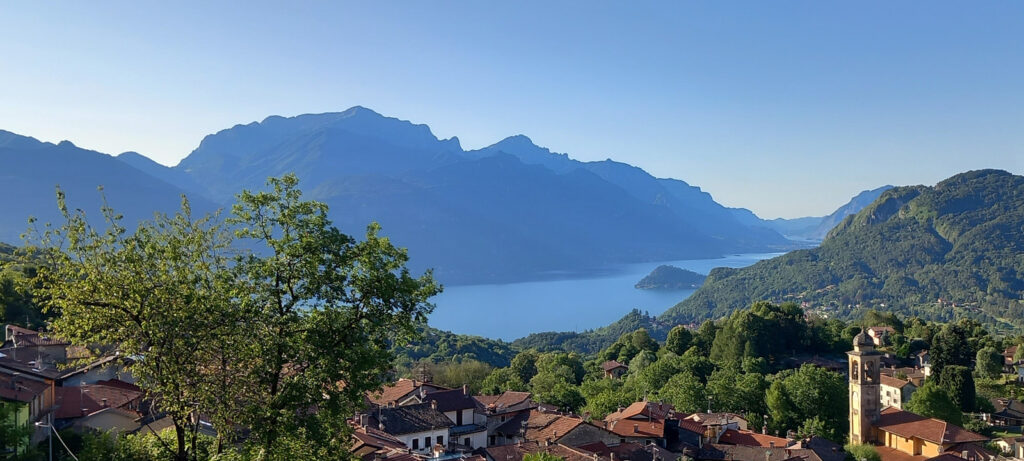
Lake Como’s Y-shaped glacial formation is not picturesque accident; it is structural control. Steep alpine flanks restrict lateral expansion. Shoreline access narrows into branching arms — the Como branch sociable yet contained, the Lecco arm more austere and withdrawn. Along 46 kilometres of waterfront, estates withdraw into woodland or ascend hillside terraces, reducing adjacency by design.
Flat coasts invite spread. Glacial lakes enforce discipline.
Strict heritage protections and limited buildable plots cap new development. Villas become fixed points rather than speculative templates. Scarcity here is geological before it is regulatory.
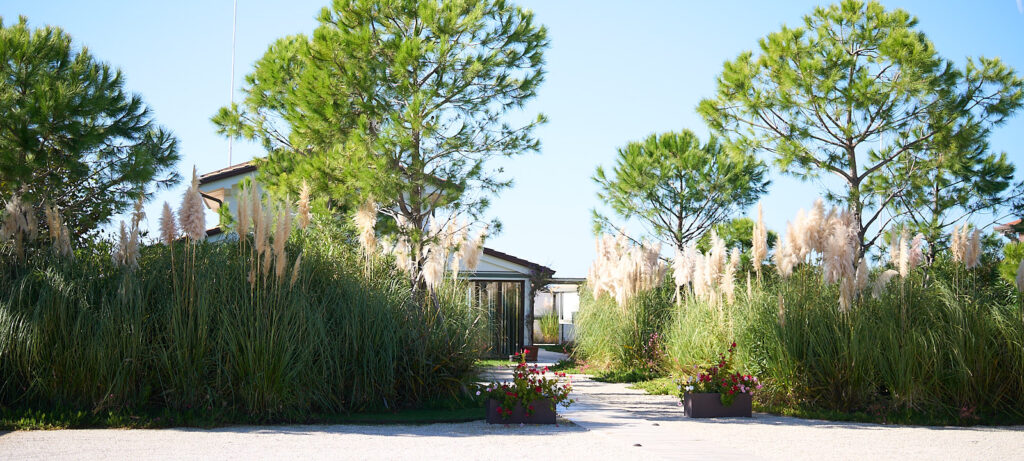
Forte dei Marmi achieves parallel insulation through a different geometry. The Versilia coastline lies flat, but the Apuan Alps rise abruptly behind it, forming a natural backdrop that discourages vertical excess. Pine groves absorb inland visibility. Premium districts such as Roma Imperiale cluster discreetly, while larger estates disperse toward wooded edges. Municipal height and volume restrictions preserve scale, preventing the skyline from thickening.
Linear coastline does not automatically produce exposure. Managed restraint turns openness into controlled privacy.
Architecture as commitment
Lake Como’s villas draw from neoclassical and Baroque lineages, shaped by families whose names preceded tourism. Villa d’Este, originally built in 1568 for Cardinal Gallio, later hosted European aristocracy before becoming a hotel in 1873. Passalacqua, expanded in 1787 and associated with Innocent XI, sheltered Bellini during his creative peak. Restoration, not reinvention, dominates. New builds are rare; adaptation respects lineage.
Buildings here are not commodities; they are inheritances.
Forte dei Marmi’s Liberty-era and early modernist villas communicate a different tone — lighter façades, garden depth, beach adjacency — yet the underlying logic is similar. Estates commissioned by industrial families in the early twentieth century remain embedded in family memory. Contemporary renovations favour restraint over spectacle, maintaining garden proportions and controlled volumes.
In both regions, architecture functions as a preservation instrument. It rewards long holds and discourages rapid turnover.
Dispersion as discretion
Neither enclave relies on gates or theatrical seclusion. Privacy emerges from dispersion.
Lake Como’s estates scatter along shoreline curves and hillside inclines, often buffered by private docks and mature vegetation. Neighbours exist, but rarely intrude. Visibility narrows naturally.
Forte dei Marmi mixes selective clustering with inland spread. Private beach concessions create semi-owned coastal segments. Pine screens soften lines of sight. The rhythm remains horizontal but filtered.
Contrast this with hotel-dense enclaves — Porto Cervo, the Amalfi Coast — where topography compresses attention and intensifies exposure. There, density amplifies visibility. On Como and in Forte, dispersion reduces it.
Proximity without surrender
The numbers confirm what geography suggests.
Lake Como’s prime lakefront properties commonly trade between €10,000 and €20,000+ per square metre, with demand frequently outpacing supply. Foreign ownership in prime segments often exceeds sixty percent, with U.S. buyers representing a leading cohort in recent interest cycles. Inventory remains constrained relative to global inquiry.
Forte dei Marmi’s prime villas typically range between €8,000 and €12,000+ per square metre, supported by steady European HNWI demand and limited new supply. Appreciation trends remain mid-single-digit rather than speculative spikes, reinforcing predictability.
Both markets reward patience over flipping. Listings are fewer. Hold periods extend. Villas function as continuity anchors rather than short-term vehicles.
Scarcity is managed, not dramatized.
Seasonality without fragility
Neither location depends entirely on a narrow seasonal window.
Lake Como’s microclimate increasingly supports extended occupancy beyond summer peaks. Forte dei Marmi, while summer-focused, sustains off-season value through entrenched family routines and evolving wellness patterns. Both avoid the volatility of southern coasts whose economies hinge on compressed tourist cycles.
Year-round relevance strengthens capital resilience.
Franz Liszt once observed of Lake Como: “When you write the story of two happy lovers, let the story be set on the banks of Lake Como.” The remark captures atmosphere, but atmosphere alone does not preserve value. What sustains both Como and Forte dei Marmi is structure — geological constraint, regulatory discipline, architectural continuity, and predictable capital behavior.
Lake Como persuades through permanence. Forte dei Marmi persuades through discretion. In both, wealth is not drawn by spectacle but by systems that limit exposure and reward duration.
A single, trusted on-site duo — coordinating logistics, meals, and daily rhythm without agencies or fragmentation — aligns naturally with such environments. When property is treated as continuity rather than transaction, management must follow the same principle.
These enclaves do not promise drama. They offer durability. And durability, in elite real estate, is the most persuasive argument of all.