

Some wines are famous. Others are understood.
Barolo can be studied for years. You drink it in good restaurants, open serious bottles at home. But until you come to these hills and sit at the table with the people who make it, you only know it on the surface.
We were planning a wine trip and initially talked about Champagne. It made sense. We know it well, sell a lot of Champagne in restaurants run by friends, and return there often. But at the last moment we decided to leave it for later. You can’t be everywhere at once. And if you ask people who live with wine every day where they go to choose wine for themselves, the answer is consistent: the Langhe.
We left from Tuscany, where our friends—restaurateurs and sommeliers—live and work. They constantly travel through wine regions, taste, compare and update their restaurant lists. Their questions are practical: how was this vintage, how does Barolo 2013 show today, what is worth buying now. When that kind of conversation leads to the Langhe, it carries weight.
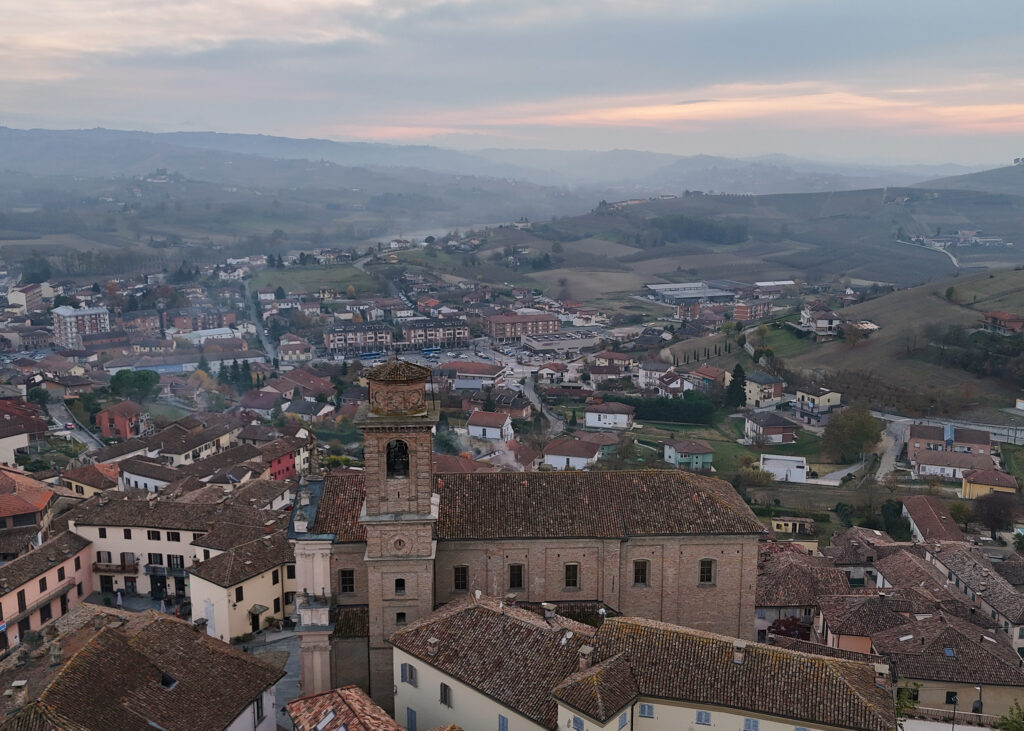
Nebbiolo takes its name from nebbia—fog. This is not poetic branding. Fog is structural here. It settles between the hills, delays the morning, softens the light and forces patience. Later, the sun cuts through. The wine follows the same rhythm: restraint first, clarity later.
The Langhe are not dramatic. They do not overwhelm. The hills move in disciplined lines. Vineyards follow exposure with precision. Villages sit on ridges as if placed deliberately—Barolo, La Morra, Monforte, Serralunga—each defined by slope and soil rather than spectacle.
Tasting Where It Is Made
Barolo is not about immediate pleasure. Young, it can feel firm, even distant. Tannins stand forward. Acidity keeps the frame tight. But with time it reorganises—rose, tar, dried cherry, earth. Structure becomes articulation. What once felt austere becomes coherent.
We had been planning the Langhe for a long time. The group was right. All old friends. Gianni arranged a Mercedes V-Class for the trip—calm on the motorway, composed on the narrow roads that wind between villages. In the Langhe, rhythm matters more than speed.
With us were Stefano and Daniele, restaurateurs and sommeliers from Versilia. For them, wine is not inventory; it is vocabulary. With people like this, any conversation about Barolo moves quickly beyond tasting notes.
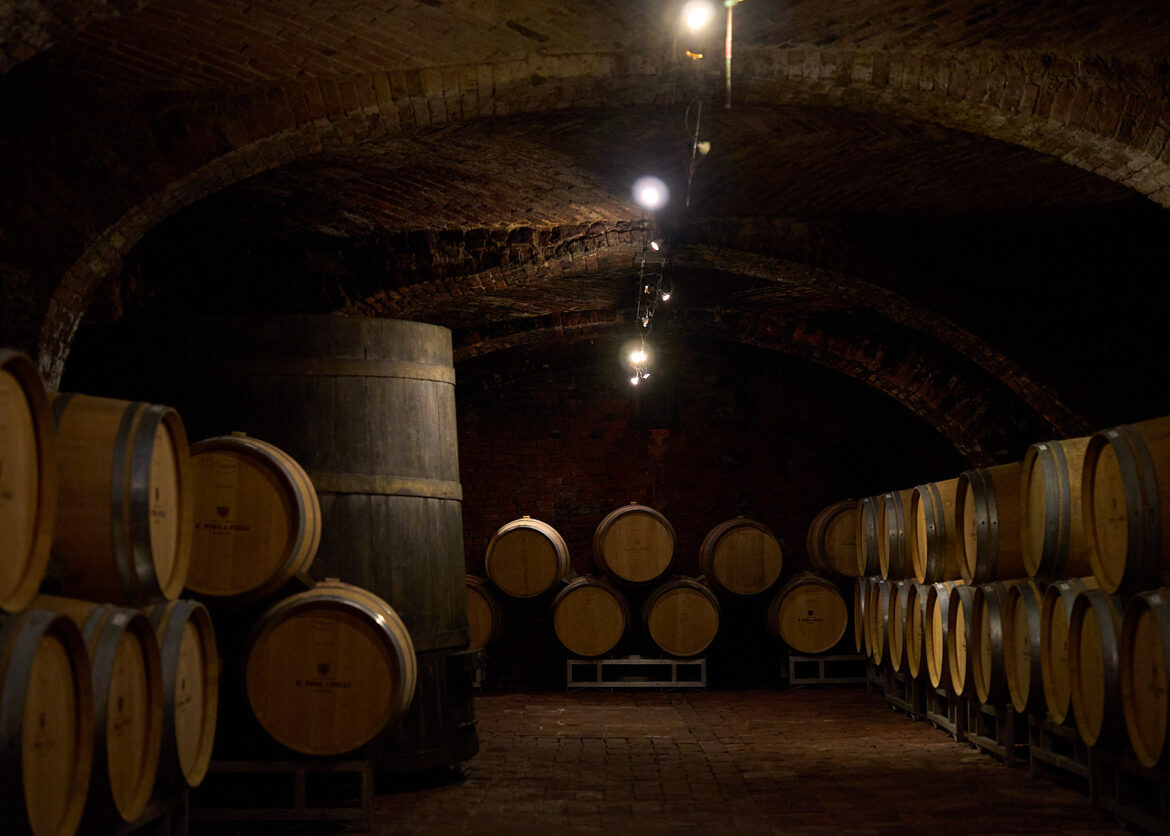
Visits here are rarely theatrical. You sit at a wooden table. The producer pours without performance. Sometimes there is no explanation at first. You look out the window at the vineyard you are drinking from. The slope becomes visible in the glass.
In Serralunga, the wines show spine and length. In La Morra, fragrance and lift. Monforte carries strength with restraint. The differences are subtle but decisive. Five minutes of road can shift elevation, soil composition and therefore structure.
Lunch extends naturally. Tajarin with butter and sage. Brasato slow-cooked in Nebbiolo. Bottles opened not for display but for understanding. Conversations move from vintages to inheritance law, from oak policy to how younger producers are thinking about climate and harvest timing.
By the second day, the analysis softens. You begin to observe rather than judge.
What Remains in the Hills
The fog in the morning no longer feels atmospheric; it feels explanatory. The silence between hills feels deliberate. You understand why this region has never needed spectacle.
Barolo here is not a luxury object. It is a working result of geography, climate and decisions made over decades. The land sets limits. The producer works within them.
When you leave the Langhe, you realise something simple: you can buy Barolo almost anywhere in the world. Allocation lists exist. Prices rise and fall. Bottles travel.
But the Barolo that explains itself—the one that carries slope, fog, conversation and context—remains tied to this place.
You cannot purchase that calibration. You earn it by sitting at the table, by driving the roads between crus, by tasting patiently across vintages while looking at the hills that shaped them.
That is the Barolo you can’t buy.