
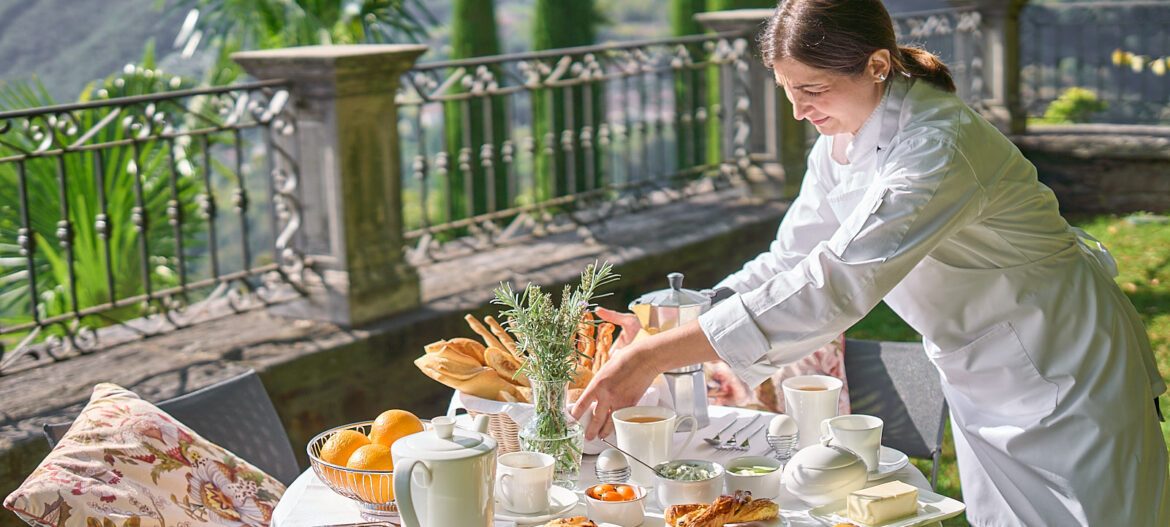
A Villa Between Seasons
Every villa has its own rhythm. Morning begins with quiet sounds—the door opening, coffee being ground, water somewhere deeper in the house. The day unfolds in layers, each with its own texture: linen, lemon, sunlight, and a low, working silence.
Over time, you begin to value this Italian rhythm especially. It is not about perfection, but about continuity. One detail follows another, and the house remains alive. Even when there are no guests, the air retains a memory of movement.
A house is never empty.
It breathes with those who have touched it.
Sometimes, when the light falls on the kitchen tiles at a certain angle, I stop for no reason. Mira is in the next room arranging fruit or sharpening knives. This is not a scene—it is simply the day living itself.
The Rhythm of Work
Hospitality lives in gestures that are rarely noticed: a napkin folded a little more carefully, a pause before a greeting, the habit of fixing something before it breaks. On a villa, these gestures repeat day after day—and they are what create a sense of calm.
The longer we do this, the clearer it becomes: ease is discipline. There is always a rhythm here—clean, prepare, anticipate, disappear. We move almost like musicians, listening more than speaking.
Outside, seasons change, guests come and go, menus shift, moods evolve. Inside the villa, a steady tone remains—not control, but order.
Quiet Moments
Sometimes there is nothing to capture except the shadow on the pool water or the scent of rosemary in the air. In moments like these, Casa Duo comes closest to what we originally envisioned: quiet elegance without performance.
Once, an elderly guest said to me, “It’s strange—your service feels like friendship.”
I smiled. Perhaps it is.
Hospitality is love translated into order.
In the end, villa life is not a chapter of work, but a way of being present. And when the day ends, the last light slides across the windows, reminding you: everything—even stillness—has its own rhythm.
Casa Duo — Villa Life Journal, 2025.


